5 Things to See in Historic Downtown Venice, FL
Nick Flerlage November 23, 2026
Five stops to see in Historic Downtown Venice, FL are the 1927 Historic Venice Train Depot, the Venice History Museum, Lord Higel House, the shops on West Venice Avenue and Centennial Park. The depot is a Mediterranean Revival railroad station from the 1920s, the museum fills the 1927 Triangle Inn with photos and local history, Lord Higel House is an 1896 Queen Anne home, Venice Avenue keeps the Mediterranean Revival look of the 1920s city plan, and Centennial Park has a gazebo and splash fountain. Half a day covers all five at an easy pace, with a short drive or bike ride east across the Intracoastal Waterway to reach the depot.
At a glance
1927 Historic Venice Train Depot: The depot is best for railroad history.
Address: 303 E. Venice Avenue, Venice.
The Seaboard Air Line Railway opened it in 1927 in the Mediterranean Revival style planned for the city. The Venice Area Historical Society runs free docent-led tours on Wednesdays and Saturdays, 10 a.m. to 1 p.m., and donations are welcome. Displays in the two waiting rooms cover Venice and depot history, including an exhibit on the work of a station agent.
Outside, the campus holds a refurbished 1953 Pullman Standard car from the Ringling Bros. circus, a 1974 caboose and a small railroad park with picnic tables. The depot also gives you access to the Legacy Trail, so a bike ride can start or end your history loop here.
Venice History Museum: The Venice History Museum is best for the town’s story in photos and objects.
Address: 351 Nassau Street South, Venice.
It’s housed in the Triangle Inn, a 1927 inn that the city saved from demolition and moved to its Cultural Campus, and the building is on the National Register of Historic Places. Exhibits cover the history of Venice, the surgeon and early land developer Dr. Fred Albee, the story of the Triangle Inn itself, and the area’s prehistoric and natural history. Admission is free, with donations welcome.
The museum also keeps the city’s archives, with more than 30,000 photographs, objects and publications, so its collection reaches well past what’s on display.
Lord Higel House: Lord Higel House is best for a look at Venice before the 1920s city plan.
Address: 409 Granada Avenue, Venice.
Joseph H. Lord built it in 1896 as a two-story Queen Anne Victorian in the middle of a citrus grove, and it’s the second oldest house in Sarasota County. George Higel managed the grove, and he and his wife Abigail raised their family there from 1906 to 1919. The house was moved twice, in 1950 and again in 2005 when the City of Venice acquired it, and the preservation group Venice Heritage has restored the south gable, roof, windows and wraparound porch.
It’s older than the Mediterranean Revival buildings that line downtown, so it makes a good contrast on a walk.
Shops and cafés on West Venice Avenue: West Venice Avenue is best for browsing on foot.
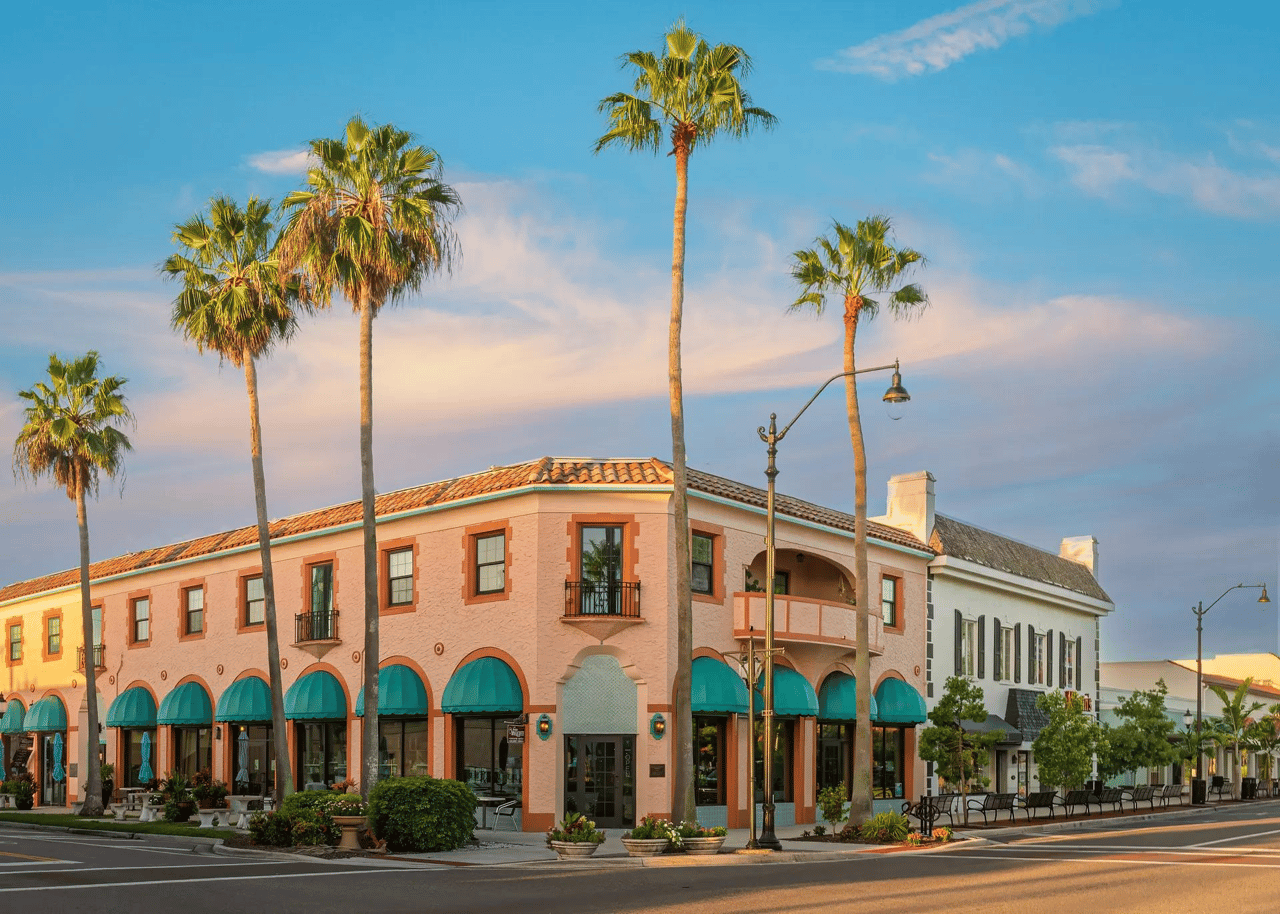
It’s the main street of Historic Downtown Venice, with palm-lined streets and Mediterranean Revival storefronts that follow the 1920s plan drawn by John Nolen. The Brotherhood of Locomotive Engineers carried out that plan and required the Mediterranean Revival style, and the downtown is part of the John Nolen Plan of Venice Historic District, listed on the National Register in 2009. The 1926 El Patio Hotel at 229 Venice Avenue is one example.
Upper Crust Cafe & Bakery, at 213 W Venice Avenue, serves breakfast until noon Monday through Saturday and all day Sunday, with lunch on weekdays and Saturdays. Mission Cafe & Coffee, at 231 Miami Avenue West, serves breakfast and lunch with smoothies, organic coffee drinks, specialty toasts and acai bowls.
Centennial Park: Centennial Park is best for a shady sit-down by the gazebo.
Address: 200 W. Venice Avenue, Venice.
It’s a downtown park with an accessible gazebo, an interactive splash fountain, restrooms and a picnic area with tables. The fountain runs from 9:30 a.m. to 9:30 p.m., children must be supervised by an adult, and dogs aren’t allowed at the fountain. The park also has a veterans memorial and a Venice MainStreet information kiosk.
The top historic sites in Venice, FL are the 1927 Historic Venice Train Depot, the Venice History Museum in the 1927 Triangle Inn, and Lord Higel House, an 1896 Queen Anne home. West Venice Avenue’s 1920s Mediterranean Revival storefronts round out a history walk downtown.
The 1927 Historic Venice Train Depot in Venice, FL has free docent-led tours on Wednesdays and Saturdays, with displays in its two waiting rooms and an exhibit on the work of a station agent. The campus also holds a 1953 Pullman Standard circus car, a 1974 caboose and a small railroad park, and it gives access to the Legacy Trail.
About half a day covers Historic Downtown Venice, FL at an easy pace, including the Venice History Museum, Lord Higel House, West Venice Avenue and Centennial Park. Add a short drive or bike ride east across the Intracoastal Waterway for the train depot.
From a 1927 railroad station and a museum in a 1927 inn to an 1896 pioneer-era house and a palm-lined main street, downtown Venice fits a lot of local history into one easy outing. We’re the team at NextHome Suncoast, and we’re happy to show you around downtown Venice or talk through any questions you have about the area.
Written by Nick Flerlage with NextHome Suncoast
Stay up to date on the latest real estate trends.

Whether buying or selling, our team is here to provide a seamless, elevated experience every step of the way. Reach out today to start the conversation.